Quick Answer: Creating a backyard pool oasis in Ponte Vedra Beach involves combining quality carpentry structures like pergolas and shade decks with durable hardscape materials like travertine pavers and stamped concrete. The right design accounts for Florida's heat, humidity, and salt air, and typically costs between $15,000 and $80,000 depending on scope. Working with experienced local contractors ensures your materials and construction methods hold up through Jacksonville's long, punishing pool season.
Key Takeaways
- Ponte Vedra homeowners need materials that resist humidity, UV exposure, and coastal salt air year-round.
- Travertine, composite decking, and pressure-treated lumber are among the best choices for Northeast Florida pool areas.
- Lounge area carpentry like pergolas and shade structures add significant home value and extend daily use of your pool.
- Permits are required for most structural additions in Duval and St. Johns counties, so plan accordingly.
- Pairing your hardscape project with proper ongoing pool maintenance protects your investment for the long term.
Ponte Vedra Beach homeowners already know they have something special. The neighborhood has the weather, the space, and the lifestyle that makes a backyard pool area feel less like a luxury and more like a necessity. But a pool sitting in bare concrete or patchy grass is a missed opportunity. The real transformation happens when you surround that water with a lounge area designed to actually be lived in.
Jacksonville averages 233 sunny days per year, which means pools here are actively used 10 or more months annually. That kind of year-round pressure demands a pool surround built for durability, not just looks. Between the heat, the afternoon thunderstorms, and the humidity that makes everything feel like it is being slow-cooked, the wrong materials or the wrong construction approach will show their age fast.
This guide walks you through everything you need to know about planning, budgeting, and building a pool oasis in Ponte Vedra and the surrounding Jacksonville area, from hardscape material selection to carpentry structures to the questions you should be asking any contractor before work begins.

What You Need to Know Before Starting a Pool Oasis Project
The term "pool oasis" covers a wide range of project types. At the smaller end, it might mean adding a pergola and replacing dated concrete with pavers. At the larger end, it can mean a full outdoor living room with a summer kitchen, shade sail system, built-in seating, fire features, and custom hardscape that flows across the entire backyard. Knowing your goals before calling a contractor saves time and helps you get accurate estimates.
Hardscape refers to the non-living, hard surfaces around your pool: pavers, concrete, natural stone, tile, and similar materials. Carpentry refers to wood or composite structures like pergolas, shade decks, cabanas, and built-in benches. Most full pool oasis projects involve both, and they need to work together aesthetically and structurally.
In Northeast Florida, both hardscape and carpentry choices are heavily influenced by the local climate. The Florida Building Commission sets specific structural standards for outdoor structures that account for wind load and moisture exposure, and St. Johns County and Duval County each have their own permitting requirements on top of that. Any structural addition to your property, including a pergola or covered shade structure, will likely need a permit before work begins.
It also pays to think about your pool's health before you redesign around it. If you are planning a major hardscape renovation, that is a good time to address any outstanding pool maintenance needs. Our team at Clean & Clear Pools regularly works alongside hardscape contractors to make sure weekly pool cleaning schedules stay on track even during active construction phases.
Lounge Area Carpentry and Hardscape Design: A Complete Breakdown
Hardscape Material Options for Ponte Vedra Pool Areas
The most popular hardscape choices in Ponte Vedra and coastal Northeast Florida are travertine pavers, porcelain pavers, natural flagstone, and stamped concrete. Each has trade-offs worth understanding before committing.
Travertine pavers are the gold standard for Florida pool areas. They stay cooler underfoot than most other materials because the natural stone does not absorb heat the same way dark concrete does. They are slip-resistant even when wet, which matters around a pool deck. The downside is cost: expect to pay more per square foot than you would for concrete, but the longevity and appearance justify that investment for most Ponte Vedra homeowners.
Porcelain pavers have grown in popularity over the last several years. They are extremely durable, nearly impervious to staining, and can mimic the look of natural stone or wood without the maintenance demands. They hold up well in salty coastal environments and are a strong choice for homes closer to the Intracoastal or the beach.
Stamped concrete is a cost-effective option that can be shaped and colored to resemble stone or brick. The concern in Florida is cracking over time as the ground shifts with moisture cycles. A quality installer who uses proper expansion joints and a good sealer can reduce that risk, but it remains something to watch over the years.
Natural flagstone like coquina or Pennsylvania bluestone offers a unique, organic look. It works beautifully in Ponte Vedra's coastal aesthetic. Like travertine, it stays relatively cool and provides good grip when wet.
Carpentry Structures That Make a Real Difference
The lounge area itself is defined as much by shade and enclosure as it is by the surface underfoot. Florida's intense summer sun means that a pool area without shade is uncomfortable from about 10 a.m. to 4 p.m. for much of the year. The right carpentry structure solves that problem and turns your pool deck into a place you actually want to spend time.
Pergolas are the most versatile and popular option. A traditional open-top pergola provides partial shade and can be fitted with shade sails, retractable canopies, or climbing plants for additional coverage. Aluminum and steel pergolas require less maintenance than wood in Florida's humidity, while pressure-treated lumber or naturally rot-resistant woods like cypress or ipe offer a warmer aesthetic with proper upkeep.
Covered shade structures with a solid or louvered roof offer full protection from both sun and rain, which in Jacksonville means afternoon thunderstorms from June through September. Louvered roof systems that open and close with a remote have become popular in higher-end Ponte Vedra installations because they offer flexibility across all weather conditions.
Cabanas and pool houses represent the upper end of lounge area carpentry. These are small freestanding or attached structures that can include changing rooms, storage for pool equipment, outdoor showers, and even small kitchens or bars. They require the most significant investment and permitting effort, but they add substantial square footage of functional living space.
Built-in seating and planter walls are often overlooked but make a real difference in how a pool area feels. Low masonry or paver walls that double as seating define zones in the space and eliminate the visual clutter of movable furniture.
Design Principles That Work for Northeast Florida
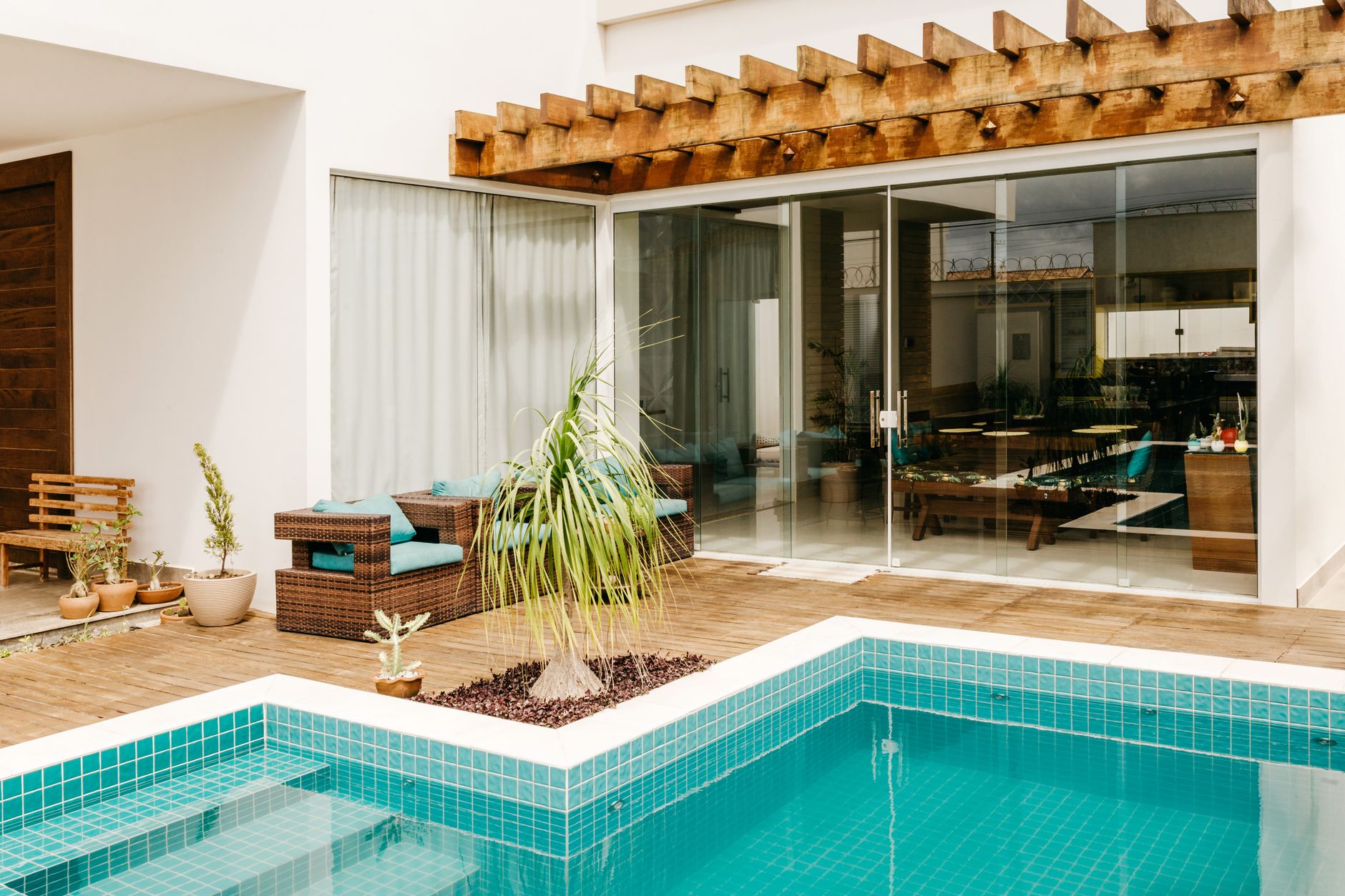
Good pool oasis design in Ponte Vedra respects the local environment rather than fighting it. That means orienting shade structures to block the afternoon western sun, using light-colored materials that reflect heat rather than absorb it, and leaving enough open area around the pool to allow airflow. Landscaping integration matters too: properly placed palms, ornamental grasses, and salt-tolerant plantings soften hardscape edges and contribute to the oasis feeling without overwhelming the pool as the focal point.
Drainage is a critical and often underplanned element. Florida gets significant rainfall, and a hardscape design that does not account for water movement will leave you with pooling water, erosion, and potential structural damage over time. Sloping pavers away from the pool and the home's foundation, combined with permeable joints or drainage channels at strategic points, handles this effectively.
Common Mistakes Jacksonville Homeowners Make
1. Choosing Materials Based on Price Alone
The cheapest paver or the least expensive lumber option rarely holds up in Northeast Florida's climate. Homeowners who go with standard untreated wood for pergola posts, for example, often find themselves dealing with rot, insect damage, or warping within three to five years. Investing in pressure-treated lumber, composite materials, or powder-coated aluminum costs more upfront but dramatically reduces replacement and repair costs over the life of the structure.
2. Skipping the Permit Process
Some homeowners try to avoid permits to save time or money, but this creates real problems. Unpermitted structures can complicate home sales, result in fines from the City of Jacksonville or St. Johns County, and may need to be removed entirely if discovered. The City of Jacksonville's permitting process exists to ensure structures meet building codes that protect your family and your property value. A reputable contractor will always pull the necessary permits before starting work.
3. Ignoring Pool Equipment Access
A beautiful new paver deck that blocks access to the pool's pump, filter, or equipment pad is a frustrating mistake that is entirely avoidable. Pool equipment needs regular servicing, and technicians need to be able to reach it without crawling through planters or removing sections of hardscape. Always coordinate your hardscape layout with whoever handles your pool filter cleaning and equipment maintenance before construction begins.
4. Underestimating the Importance of Drainage
Jacksonville receives an average of 52 inches of rain per year, much of it falling in concentrated afternoon storms during the summer months. Hardscape that looks beautiful on a dry day can become a flooding, slipping, and erosion hazard when drainage is not properly planned. Sloped surfaces, channel drains, and permeable joint material all play a role in managing water effectively.
5. Designing for Looks Only, Not Function
A pool oasis that photographs beautifully but lacks shade, comfortable seating zones, or adequate lighting for evening use will not get the daily enjoyment it should. Think about how you actually use your outdoor space at different times of day and year. The best Ponte Vedra pool oasis designs account for morning coffee, afternoon swims, and evening entertaining as distinct experiences with different needs.
DIY vs. Hiring a Professional in Jacksonville
There are genuine opportunities for DIY work in a pool oasis project, and there are places where doing it yourself will cost you more in the long run than hiring a pro from the start.
Where DIY makes sense: Installing simple shade sails between existing anchor points, adding outdoor furniture, planting landscaping around an existing hardscape, painting or resealing a concrete deck, and adding string lighting or solar fixtures are all approachable DIY projects for a handy homeowner. These improve the oasis experience without requiring structural knowledge or permits.
Where professional help is worth every dollar: Structural carpentry like pergolas, covered shade structures, and cabanas require proper footings, correct lumber sizing for Florida wind loads, and often permits. Hardscape installation, particularly for large areas of pavers or natural stone, requires proper base preparation (typically 4 to 6 inches of compacted gravel and sand in Florida's sandy soil) that is easy to get wrong without experience. A poorly prepared base leads to shifting, cracking, and uneven surfaces within a few years. Electrical work for lighting and fans around the pool must meet code and be handled by a licensed electrician.
The team at Clean & Clear Pools has worked on thousands of completed jobs across Jacksonville and regularly sees the downstream effects of DIY hardscape work done without proper preparation. The most common scenario is a homeowner who installed pavers themselves, skipped the proper base, and ended up with a sunken, uneven surface within two or three rainy seasons. Correcting that typically costs more than a professional installation would have in the first place.
The honest answer is this: design and plan as much as you want on your own, handle the soft furnishing and decorating yourself, and hire licensed professionals for anything structural, electrical, or involving significant hardscape area. If you are in the Ponte Vedra, St. Johns, or greater Jacksonville area, use contractors familiar with local soil conditions, permitting requirements, and the specific demands of Florida's coastal climate. Homeowners near the beach should also check out our notes on conditions for pool service in Ponte Vedra Beach, since salt air affects both pool chemistry and building materials similarly.
What to Expect: Cost Breakdown for Jacksonville
Pool oasis projects vary enormously in scope and cost. The following ranges reflect real-world pricing in the Jacksonville and Ponte Vedra market as of 2024 and 2025. These are investments in your property's value and livability, not just expenses.
Hardscape resurfacing or new paver installation: $15 to $30 per square foot installed, depending on material. A 500-square-foot pool deck resurface using travertine pavers falls in the $7,500 to $15,000 range. Stamped concrete runs somewhat less; premium porcelain or natural stone runs more.
Pergola installation: $5,000 to $20,000 depending on size, materials, and complexity. A simple pressure-treated wood pergola over a 12x16 area falls toward the lower end. A powder-coated aluminum louvered pergola with a motorized roof system sits at the upper end of this range or beyond.
Covered shade structure or cabana: $20,000 to $60,000 or more depending on size, roofing type, electrical work, and finishes. These projects require permits and typically take four to eight weeks from permit approval to completion.
Built-in seating walls and planters: $3,000 to $10,000 depending on length, materials, and complexity of design.
Outdoor lighting: $1,500 to $8,000 for a professional low-voltage landscape and pool area lighting system. This is one of the highest-impact upgrades per dollar spent in terms of evening usability.
Full pool oasis renovation (hardscape plus carpentry plus landscaping): $30,000 to $80,000 or more for a comprehensive Ponte Vedra-caliber project. According to the National Association of Home Builders, well-executed outdoor living spaces consistently return 50 to 80 percent of their cost in home resale value, with higher returns in premium markets like Ponte Vedra Beach.
Keep in mind that materials and labor costs in Northeast Florida have increased over the past several years. Getting two to three competitive bids from licensed contractors is always a good practice, and any bid should include a detailed scope of work, permit fees, and material specifications.

Pro Tips from Our Jacksonville Team
The Clean & Clear Pools team, rated 5.0 stars across 135 verified Google reviews, works in Ponte Vedra Beach, Nocatee, Mandarin, Southside Jacksonville, and surrounding areas every week. Here is what we tell homeowners who are planning or renovating a pool oasis:
1. Choose light-colored pavers and surfaces wherever possible. Dark materials absorb Florida's intense solar radiation and become painful to walk on barefoot by mid-morning in summer. Lighter travertine, cream-toned pavers, or white-washed concrete stay far more comfortable. Tested surface temperatures in direct Florida sun can vary by 20 to 30 degrees Fahrenheit between light and dark materials.
2. Plan your electrical before the hardscape goes in. Conduit for outdoor outlets, pool lighting circuits, and fan wiring should be run before pavers are installed, not after. Retrofitting electrical through a finished paver deck is expensive and disruptive. Coordinate with your electrician and hardscape contractor before either one starts work.
3. Seal your pavers and concrete on a proper schedule. Florida's UV exposure, rain, and pool chemicals break down sealers faster than in most of the country. Natural stone and concrete pool decks should typically be resealed every two to three years. Skipping this leads to staining, spalling, and eventual surface degradation that costs far more to correct than the sealer would have cost.
4. Do not let construction disrupt your pool's water chemistry. Dust, concrete residue, and landscaping runoff during construction can significantly affect pool water balance. During any hardscape project, keep up with your pool maintenance schedule or arrange for more frequent checks. If your pool has turned green during a project disruption, our green pool recovery service can get it back to swim-ready quickly.
5. Think about the pool equipment pad as part of your design, not an afterthought. A well-designed oasis incorporates or screens the equipment area without blocking access. Decorative lattice panels, low planting beds, or a small equipment enclosure wall can keep the equipment tidy while maintaining the full access your pool technician needs for regular service visits.
6. Account for Florida's wind requirements when sizing pergola posts and beams. Northeast Florida sits in a zone with meaningful wind exposure, and the Florida Building Code sets minimum standards for structural members in outdoor structures. A contractor using undersized posts or insufficient footings to save money is creating a safety risk. Ask to see the structural specifications before signing off on any carpentry project.
Frequently Asked Questions
How long does a pool oasis renovation typically take in Ponte Vedra?
A full pool oasis renovation involving hardscape, a pergola or shade structure, and landscaping typically takes six to sixteen weeks from project start to completion in the Ponte Vedra and greater Jacksonville area. This timeline accounts for permitting, which alone can take two to four weeks in St. Johns and Duval counties. Material lead times for custom pavers or specialty carpentry components can add additional time. Weather delays from summer afternoon thunderstorms are common from June through September, so projects beginning in the fall or winter often move more quickly.
Do I need a permit to build a pergola next to my pool in Jacksonville?
In most cases, yes. Any attached or freestanding structure above a certain size in Duval and St. Johns counties requires a building permit. The specific thresholds can vary, but in general, if a structure has a roof, footings, or attaches to your home, it needs a permit. The City of Jacksonville and St. Johns County both have online permitting portals where you can confirm requirements for your specific project type. A licensed contractor will typically handle permit applications as part of the project, but confirm this in your contract before work starts.
What is the best paver material for a pool deck in Northeast Florida?
Travertine pavers are widely considered the best overall choice for Florida pool decks because they stay cooler underfoot, are naturally slip-resistant when wet, and hold up well in hot, humid, and occasionally salty environments. Porcelain pavers are a close second, offering excellent durability and very low maintenance. Stamped concrete is a more budget-friendly option but tends to develop cracks over time in Florida's expanding and contracting soil. Whatever material you choose, proper base preparation with compacted gravel and sand is just as important as the paver itself for long-term performance.
How do I choose a contractor for a pool oasis project in Jacksonville?
Start by verifying that any contractor you consider holds a current Florida contractor's license and carries both general liability and workers' compensation insurance. Ask specifically about their experience with pool surround projects in Jacksonville or St. Johns County, since local soil conditions and permitting requirements have specific nuances. Request references from similar projects completed in the last two years and, if possible, visit a completed project in person. Get at least two to three written bids with detailed scopes of work, and be cautious of bids that are significantly lower than others without a clear explanation.
How much does a pool lounge area renovation cost in Ponte Vedra Beach?
Costs vary widely depending on scope and materials. A modest paver resurfacing project with a simple pergola might run $12,000 to $25,000. A comprehensive oasis renovation with premium travertine, a louvered pergola system, built-in seating walls, and professional landscaping can reach $60,000 to $80,000 or more. Ponte Vedra homeowners tend to invest at the higher end of the range, both because property values support that investment and because the neighborhood's aesthetic standard sets a high bar. Plan your budget with a 10 to 15 percent contingency for unexpected conditions like poor soil or underground obstacles.
What maintenance does a pool oasis hardscape require in Florida?
Florida's climate accelerates wear on outdoor surfaces, so staying ahead of maintenance matters. Pavers should be pressure-washed annually and resealed every two to three years. Check paver joints for sand migration after heavy rains and top off with polymeric sand as needed. Wood carpentry structures should be inspected annually for rot, insect damage, and paint or stain condition, with touch-up or recoating as needed. Aluminum and composite structures need far less maintenance but should still be cleaned periodically. Pool chemicals splashing onto hardscape surfaces can cause staining over time, so rinsing the deck after adding chemicals to the pool is a simple habit that protects your investment.
Will a pool oasis addition increase my home's value in Ponte Vedra?
A well-designed and professionally installed pool oasis consistently adds to home value in Ponte Vedra Beach, where outdoor living is a major selling point for buyers. According to the National Association of Home Builders, outdoor living space improvements return 50 to 80 percent of project cost in resale value on average, with higher returns in desirable markets. In Ponte Vedra specifically, a polished outdoor living area is essentially a standard expectation in the higher price brackets. Buyers who are comparing homes will consistently rate a finished pool oasis as a significant advantage over a bare concrete deck.
How do I keep my pool in good condition during a hardscape renovation?
Construction dust, dirt, and debris are among the most common pool contaminants during a renovation project. Covering the pool when work is actively happening nearby helps significantly. If the pool must remain uncovered, plan on more frequent cleaning and water chemistry checks during the project. Construction runoff carrying concrete dust or grout residue can rapidly throw off pH and alkalinity, and if ignored long enough can cloud or discolor the water. The EPA recommends maintaining proper pool water chemistry as a core element of pool safety. Our team at Clean & Clear Pools can adjust your weekly pool cleaning schedule or add mid-week checks during active construction phases to keep everything in balance.
Are there pool oasis design considerations specific to homes near the coast in Ponte Vedra?
Absolutely. Homes within a mile or two of the Atlantic or the Intracoastal Waterway in Ponte Vedra deal with elevated salt air exposure that accelerates corrosion on metal hardware, fades wood finishes faster, and can affect pool chemistry. Choose hardware (screws, brackets, fasteners) rated for marine or coastal environments. Aluminum or stainless steel structures hold up far better than powder-coated steel in high-salt-air zones. Pool water in coastal areas may also require more frequent monitoring for mineral content. The Florida Department of Health recommends testing pool water at least weekly to ensure safe, balanced chemistry, which is especially wise in coastal environments where airborne minerals can affect water balance.
Ready to Get Started?
Your Ponte Vedra backyard has the potential to be one of the most enjoyable spaces in your home, a true pool oasis designed for the way people actually live in Northeast Florida. Whether you are starting from bare concrete and a basic pool or refreshing an existing outdoor space, the right combination of hardscape and lounge area carpentry transforms how much time you spend outdoors and how much you enjoy it.
Clean & Clear Pools is Jacksonville's trusted pool service partner, holding a 5.0-star Google rating from 135 verified customer reviews across thousands of completed jobs. We serve homeowners throughout Jacksonville, Ponte Vedra Beach, Mandarin, Nocatee, St. Johns, Fleming Island, and Southside Jacksonville.
If you are planning a pool oasis project and want expert guidance on the pool side of the equation, including how to protect your pool during construction and what ongoing maintenance your finished space will need, we are here to help. Call us at (904) 747-8788 or Request a Free Estimate online. Our team is happy to walk through your project, answer your questions, and connect you with the right resources to make your backyard vision a reality.
Clean & Clear Pools
7643 Gate Parkway, Suite 104-1230, Jacksonville, FL 32256
Phone: (904) 747-8788 | (904) 747-9636