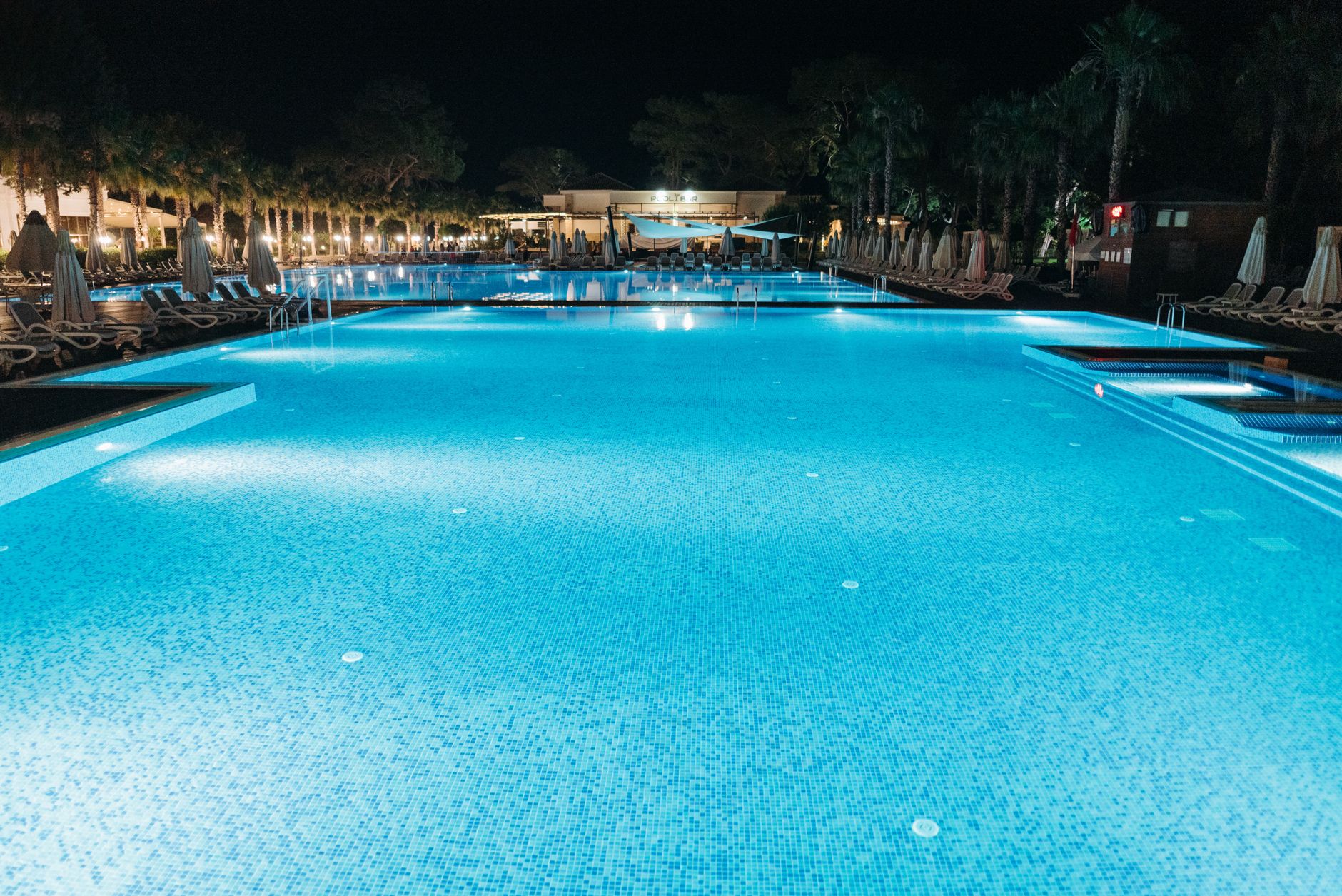
A pool light provides essential nighttime visibility and swimming safety, typically costing between $450 and $1,700 for complete equipment and professional installation. Most homeowners choose low-voltage LED fixtures because they consume 80 percent less electricity and last up to ten times longer than older incandescent bulbs. You will find exact equipment choices, installation steps, common diagnostic fixes, and maintenance guidelines below.
Whether you manage residential pools or larger commercial swimming facilities, proper underwater illumination keeps swimmers safe and highlights pool water clarity. Florida pool owners in particular experience intense year-round sunshine and heavy summer thunderstorms, which places unique physical stress on outdoor pool equipment. Understanding how underwater electrical components function helps prevent unexpected repair expenses down the road.
A Pool Light System Costs Between $450 and $1,700 Installed
Pricing for an underwater illumination system depends on whether you are replacing an existing bulb or installing brand-new electrical conduit and housing. A basic replacement bulb for an existing wet niche fixture costs between $40 and $150 for parts, plus $150 to $250 for qualified labor. A complete fixture overhaul, including cord pulling through underground conduit and transformer wiring, ranges from $650 to $1,700 depending on fixture quality and pool construction type.
Labor charges in northern Florida typically run between $100 and $175 per hour for certified pool technicians. Standard bulb swaps take approximately one hour when the existing cord has sufficient slack to reach the pool deck. Running new low-voltage lines from an automated subpanel or repairing a cracked wet niche requires additional specialized labor hours.
What Drives Total Fixture Replacement Expenses?
The primary cost driver is the length and condition of the wiring conduit running between the equipment pad and the wet niche. Conduits that suffer from heavy calcium buildup, pinched PVC joints, or roots from nearby landscaping require mechanical clearing or complete trench replacement. In addition, transitioning an older 120-volt system to a safer 12-volt low-voltage system requires an exterior step-down transformer, adding $120 to $280 to material costs.
How Operating Costs Differ Between Technologies
Older incandescent bulbs consume 300 to 500 watts per hour, which can add significant charges to monthly electrical bills during peak summer swim months. A modern LED replacement requires only 30 to 58 watts while delivering equivalent or superior lumen output. Operating an LED fixture for four hours nightly costs less than $12 per year in electricity, compared to more than $85 per year for an equivalent incandescent bulb.
Selecting the Proper Pool Light Technology for Your Water
Pool owners can select between several distinct illumination technologies, each offering specific tradeoffs in initial cost, longevity, and color capability. Selecting the correct system requires balancing upfront budget limits with long-term energy use and service requirements. For properties throughout Duval and St. Johns counties, LED luminaires have quickly become the regional standard due to longevity and efficiency.
Color output also influences the visual presentation of plaster and pebble finishes. Cool white fixtures provide crisp visibility that highlights pristine water chemistry. Color-changing spectrum fixtures allow homeowners to cycle through vibrant blue, green, and magenta hues to create tailored evening ambiance.
Incandescent and Halogen Fixture Considerations
Incandescent pool fixtures rely on traditional filaments housed inside sealed glass envelopes, producing a warm glow that many pool owners enjoy. However, these units operate with limited operational life, usually burning out after 1,000 to 2,000 hours of use. Halogen units offer slightly brighter output and improved efficiency over base incandescent models, but they generate substantial heat that can prematurely degrade rubber sealing gaskets over time.
Modern LED Fixture Capabilities and Advantages
Modern LED units use solid-state arrays that operate cool to the touch and run for 30,000 to 50,000 hours under standard operating conditions. Because LEDs generate light via semiconductors rather than burning filaments, they tolerate power fluctuations and vibration far better than filament-based options. Multi-color LED units also combine directly with modern smart-pool control automation, letting you adjust color schedules straight from a mobile application.
Fiber Optic Illumination Systems
Fiber optic swimming pool systems keep the electrical light engine entirely out of the water inside a dry box located at your equipment pad. Stranded optical cables carry light from that central box through conduit to underwater lens fittings embedded in the pool wall. While fiber optic setups eliminate all electrical current from the pool structure, the bulbs in the dry illuminator box require periodic replacement, and total underwater brightness remains noticeably lower than dedicated LED luminaires.
Comparing Underwater Fixture Types and Lifespans
Evaluating the true cost of ownership involves comparing equipment purchase price, routine power consumption, and expected operational lifespan. The following breakdown illustrates typical performance metrics for residential and light commercial swimming installations based on standard 1,000 annual operating hours.
| Lighting Category | Average Fixture Cost | Energy Usage | Expected Lifespan | 10-Year Ownership Cost |
|---|---|---|---|---|
| Standard Incandescent | $200 - $350 | 300W - 500W | 1,000 - 2,000 hours | $1,100 - $1,600 |
| High-Output Halogen | $250 - $400 | 250W - 400W | 2,000 - 3,500 hours | $950 - $1,400 |
| Single-Color LED | $400 - $700 | 30W - 55W | 30,000 - 50,000 hours | $550 - $850 |
| Color-Changing Multi-LED | $600 - $1,100 | 35W - 65W | 30,000 - 50,000 hours | $750 - $1,250 |
| Fiber Optic Cable Array | $800 - $1,500 | 150W - 250W | 5,000 hours (illuminator) | $1,400 - $2,200 |
Diagnosing Common Pool Light Failures and Moisture Problems
Underwater lighting components operate in an unforgiving submerged environment filled with dissolved sanitizing chemicals, natural minerals, and fluctuating hydrostatic pressures. When a system fails, the root cause generally stems from water intrusion, circuit breaker faults, or damaged wiring insulation. Identifying the underlying symptom early prevents water intrusion from spreading into subterranean conduit runs.
Routine pool maintenance technicians evaluate underwater housings during seasonal checkups to verify proper ground-fault operation and lens clarity. In Florida, heavy lightning activity can also trip sensitive ground-fault circuit interrupters (GFCI) without causing permanent damage to the luminaire itself. Diagnosing the issue methodically avoids unnecessary fixture replacement expenses.
Moisture Intrusion and Lens Fogging
Condensation or visible water trapped behind the glass lens indicates a compromised perimeter silicone gasket or a warped metal clamp ring. Water entering the interior chamber will rapidly short out incandescent elements or destroy LED circuit boards. If you spot trapped moisture or water lines behind the lens, immediately cut power at the breaker panel and keep the circuit off until a professional can disassemble and dry the housing.
Tripping GFCI Breakers and Ground Faults
Ground-fault circuit interrupters monitor current balance between the hot and neutral conductors, instantly opening the circuit if tiny stray currents leak toward earth ground. When a breaker trips the exact moment you flip the power switch, moisture has likely bridged the electrical contacts inside the wet niche or the junction box. If the breaker trips intermittently, decaying insulation inside the conduit or loose terminal lugs in the exterior transformer enclosure often represent the primary culprit.
Conduit Leaks and Water Loss
Pool leaks frequently occur around the light niche rather than through the pool plaster itself. The electrical conduit connecting the rear of the niche to the deck-level junction box can crack if pool shells shift slightly during ground settling or water table fluctuations. Water then escapes through the conduit into surrounding soil. Specialized two-part pool epoxy or expanding silicone stoppers allow technicians to seal conduit entries around the existing cord without disrupting electrical continuity.
Step-by-Step Fixture Replacement and Electrical Safety
Safety is the primary consideration whenever water and electricity interact in a backyard recreation area. Modern installations follow National Electrical Code (NEC) Article 680 standards, which mandate dedicated bonding grids, proper grounding, and approved GFCI protection on all aquatic lighting circuits. Qualified technicians perform these replacements quickly without draining the pool water by taking advantage of coiled service wire.
Professional pool companies maintain specialized equipment to pull replacement cables through tight conduit bends without damaging the protective outer jacket. Property owners should never attempt underwater wire splicing or bypass a tripped GFCI outlet to force a light on. Doing so risks serious electric shock drowning (ESD) incidents.
Removing the Housing Without Draining Pool Water
Manufacturers engineer wet niche fixtures with extra cord coiled neatly behind the housing inside the niche. The technician shuts off all relevant circuit breakers, removes a single brass or stainless steel screw at the top of the face ring, and gently levers the fixture out of the wall. The entire sealed luminaire floats or lifts up onto the pool coping deck, where it rests comfortably on a soft towel for bench testing or bulb replacement.
Replacing the Gasket and Resealing the Lens
Whenever a sealed housing is opened, the rubber gasket must be replaced immediately. Old gaskets take a permanent compression set, harden over years of submersion, and will fail to hold a watertight seal if reinstalled. Technicians clean all mating surfaces thoroughly, install an OEM-grade replacement gasket, and tighten the tension clamp evenly using cross-pattern screw adjustments to establish uniform sealing pressure around the glass perimeter.
Pulling New Wire to Deck-Level Junction Boxes
When swapping a damaged luminaire assembly, the old cord serves as the pull string for the new fixture cord. The technician disconnects the conductors inside the deck-level junction box, binds the stripped ends of the old and new cables together with heavy-duty mechanical ties and vinyl tape, and applies non-conductive wire pulling lubricant. Pulling smoothly from the junction box draws the fresh waterproof cable through the underground conduit without stretching or kinking.
Maintenance Routines for Commercial and Residential Pools
Submerged fixtures require routine physical and chemical care to maintain optimal visibility and avoid structural decay. Both residential pools and high-traffic commercial pools benefit from scheduled attention during routine pool cleaning cycles. Neglecting fixture care allows calcium buildup and organic debris to obscure light output over time.
Water chemistry balance plays a direct role in fixture longevity. Aggressive, low-pH water leaches metals from brass pilot screws and niche rings, leaving unsightly rust or green copper stains down plaster walls. High pH and elevated calcium hardness cause scale formations on glass lenses that scatter light beams and diminish overall brightness.
Managing Algae Growth Around Wet Niches
The gap between the wet niche wall and the light housing provides a protected, dark harbor where black and yellow mustard algae frequently flourish. Even properly chlorinated water circulates sluggishly behind the fixture bowl. During complete maintenance cleanings, service professionals periodically unfasten the housing, scrub the interior cavity with a stiff bristle brush, and flush the niche with concentrated chlorine to kill hidden organic spores.
Calcium Scale Removal on Glass Lenses
Hard water minerals deposit heavy white or gray crusts across submerged glass lenses over years of service. This scaling reduces brightness output by as much as 40 percent. Technicians dissolve these deposits using specialized dilute sulfamic acid solutions or non-abrasive pumice pastes, restoring full optical clarity without scratching or etching the tempered safety glass.
Inspecting Grounding and Bonding Connections
Every wet niche incorporates an internal brass bonding lug that joins the metal shell to the swimming pool structural rebar grid via an insulated solid copper wire. This bonding grid equalizes electrical potential across all metal components around the water, neutralizing stray voltage. Technicians inspect these connections during scheduled pool repairs to confirm that chlorine corrosion has not compromised bonding integrity.
Frequently Asked Questions About Underwater Lighting
Can I replace an underwater pool light bulb without draining the water?
Yes, you do not need to drain your pool to replace an underwater bulb. Wet niche luminaires are designed with four to eight feet of extra waterproof cord coiled behind the fixture inside the niche shell. After turning off all power at the main breaker, a technician loosens the single securing screw at the twelve o'clock position on the rim, lifts the fixture to the pool deck, and completes the bulb swap right on the coping stones.
Why does my underwater pool light keep tripping the breaker?
An underwater fixture trips the circuit breaker due to moisture inside the sealed housing, a damaged power cord inside the conduit, or a failing GFCI safety outlet. Ground-fault circuit interrupters detect tiny electrical current leaks down to 4 to 6 milliamperes and immediately sever power to prevent electric shock hazards. If the breaker trips immediately upon switching on, inspect the housing lens for condensation or call a professional to evaluate circuit resistance.
How long do modern LED swimming pool fixtures typically last?
High-quality LED swimming pool luminaires typically last between 30,000 and 50,000 operating hours. For the average residential pool owner who runs their lights for three hours each evening, an LED unit can operate reliably for ten to fifteen years. In comparison, traditional incandescent bulbs generally require replacement every one to three years due to burned-out filaments or thermal gasket failure.
Is it safe to swim in a pool if the underwater light does not work?
You should not swim in a pool with a non-functioning underwater light until you identify why it stopped working. If the light simply burned out its filament, there is no direct electrical hazard, though night swimming visibility remains poor. However, if the light failed because water breached the housing or cracked the conduit, a dangerous ground fault could exist. Turn off the fixture breaker and have a qualified pool specialist inspect the system before swimming after sunset.
What is the difference between 12-volt and 120-volt pool lights?
A 120-volt fixture runs standard line voltage directly from your household breaker panel into the pool wall niche, requiring grounding and GFCI protection to remain safe. A 12-volt fixture routes power through an outdoor step-down safety transformer, lowering the operating voltage before the electricity ever approaches the water. Most modern building codes and electrical standards encourage 12-volt low-voltage fixtures because they dramatically reduce shock risks if a seal fails.
Can I switch my old incandescent fixture to a modern color-changing LED?
Yes, converting from incandescent to modern color-changing LED illumination is a common upgrade for older swimming pools. In many cases, you can install a screw-in LED replacement lamp into your existing fixture housing after replacing the sealing gasket. Alternatively, you can swap the entire cord and luminaire assembly for a dedicated, integrated LED fixture to access brighter output, better thermal management, and synchronized color shows.
Maintaining a reliable pool light transforms your evening swimming experience while safeguarding family members and guests against avoidable aquatic hazards. Investing in modern low-voltage LED technology lowers power bills, reduces frequent maintenance hassles, and creates beautiful evening ambiance across your entire backyard. If you notice water behind your lens, frequent breaker trips, or dimming bulbs, contact Clean and Clear Pools to inspect your lighting system and restore crystal-clear evening illumination.