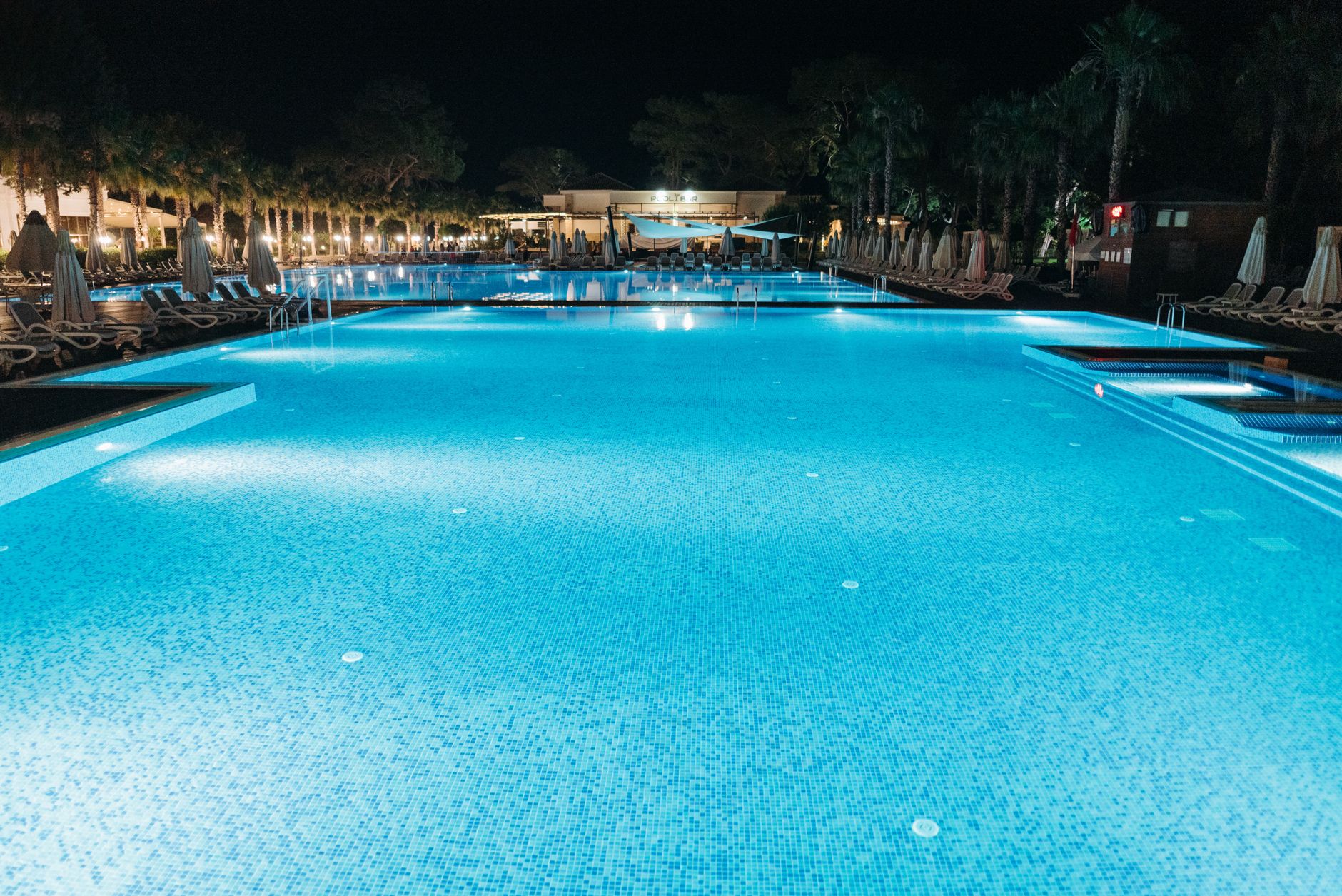
A pool light is an underwater illumination fixture installed in the wall of a swimming pool to provide visibility for evening swimming and aesthetic appeal. When your light stops working, it's almost always a burned-out bulb, a tripped GFCI, or a corroded electrical connection inside the fixture niche. Troubleshooting these issues means inspecting the power source, testing the bulb, and checking for water ingress.
Get Started Today →Pool Light Repairs Restore Proper Nighttime Visibility
Pool repairs are the process of identifying and fixing mechanical or electrical failures within your swimming pool system. A malfunctioning light often points to a breach in the waterproof housing, called a niche, which can lead to moisture damage deep inside the fixture. If your light is flickering or completely dark, disconnect the power before you touch anything. That step isn't optional.
Identifying GFCI Tripping Issues
A Ground Fault Circuit Interrupter, or GFCI, is an electrical safety device that shuts off power the moment it detects current leakage. If your light won't turn on, head straight to the breaker panel and look for a tripped GFCI. This component is critical for preventing electrical shock in wet environments like residential pools, don't ignore a repeated trip.
Replacing Burned Out Bulbs
Bulb replacement is the most frequent maintenance task for older halogen pool lights. You remove the fixture from the wall, pull the cable up onto the deck, and open the housing to swap the lamp. Always replace the gasket every single time you open the light housing. Skipping that step is how water gets into the electrical compartment.
Effective Pool Maintenance Prevents Future Light Failures
Pool maintenance involves routine inspections and chemical balancing to preserve the longevity of all pool equipment, including lighting systems. Corroded wiring and degraded seals drive most equipment failures. Keeping your water chemistry balanced, with chlorine levels held between 1, 3 ppm and pH between 7.4, 7.6, cuts down the corrosive impact on the metallic components of your light fixture significantly.
Inspecting Niche Seals and Gaskets
The niche is the recessed housing installed in the concrete or fiberglass wall where the light fixture sits. Gaskets are rubber rings that form a watertight seal between the lens and the fixture body. Check these parts annually for dry rot or cracking, catching a degraded gasket early stops water from entering the housing before any electrical damage occurs.
Managing Underwater Wiring Connections
Underwater wiring connections are the specific points where the power cable attaches to the back of the light fixture. Over time, high chlorine levels or fluctuating pH cause these connections to oxidize. Check them during your regular pool cleaning cycles. Catching oxidation early is far cheaper than replacing a shorted-out fixture.
| Issue | Common Cause | Typical Solution |
|---|---|---|
| Light won't turn on | Tripped GFCI | Reset breaker or check for ground fault |
| Flickering light | Loose wiring or bulb | Tighten connections or replace bulb |
| Water inside lens | Failed gasket | Replace gasket and lens seal |
| Dim light | Age/Mineral buildup | Clean lens or replace lamp |
Commercial Pools and Large Systems Require Specialized Lighting Care
Commercial pools are high-traffic facilities that must meet strict safety codes for underwater illumination, states like Florida, California, and Texas all enforce specific electrical and fixture standards. These lights draw more power and run on complex schedules managed by d controllers. Because these systems work hard every day, a proactive maintenance approach is the only way to prevent the kind of downtime that forces a facility to close.
d Lighting Control Systems
d control systems are digital timers or smart controllers that manage lighting schedules for large-scale installations. These units can malfunction and cut power to your lights entirely. If multiple lights fail at the same time, check your controller settings before assuming you have a wiring problem, it's often a simple programming glitch.
Safety Compliance for Public Facilities
Safety compliance means meeting local building and health department codes for electrical installations. For public or commercial pools, wiring must be correctly grounded and fixtures must be rated for the depth of the water they serve. Regular inspections keep your facility compliant and protect every guest who swims there.
Common Questions About Pool Lights
Why does my pool light keep tripping the breaker?
A light that repeatedly trips the breaker almost always signals a ground fault caused by water entering the light housing. This is dangerous. Get a professional out immediately, don't reset the breaker and walk away, because the shock hazard in the water is real.
How often should I replace my pool light bulb?
Standard halogen bulbs typically need replacement every 2,000 to 4,000 hours of use. If you've switched to LED lighting, your bulbs can last dramatically longer, often up to 50,000 hours, which makes LED the smarter long-term investment for most pool owners.
Can I replace my old pool light with an LED?
Yes, upgrading to an LED fixture is absolutely doable. LEDs are more energy-efficient and outlast halogen models by a wide margin. Just confirm the new unit is compatible with your existing niche size and voltage before you buy anything.
What should I do if I see water inside the glass lens?
Turn off the power at the breaker right away. Water inside the lens means the gasket has failed. Remove the light, dry the housing completely, and install a new gasket to restore the seal before the fixture goes back in the water.
Are pool lights in Jacksonville pools different from other regions?
The internal technology is the same, but Jacksonville pools deal with high humidity and specific mineral content in the water year-round. Those environmental factors mean seals and electrical connections break down efficienter here than in drier climates, so more frequent inspections are simply part of owning a pool in Northeast Florida.
Start Your Registration Today, No Hidden FeesKeeping your pool light in working order matters for both safety and enjoyment. Stay on top of your GFCI, inspect gaskets for water damage every season, and schedule regular professional checks, do those three things consistently and your underwater lights will run reliably all year long.